The Health Translation Hub is fostering the future of health

Be a part of the future of health.
In an Australian first, UNSW Sydney and Plenary are connecting world leading research with public health and private industry, to change the Australian approach to health.
This visionary project brings together world class clinicians, research and education, with private industry partners and public health, to drive excellence in innovation.
Limited opportunities remain to join this premium grade building and reshape the future of health.
Completion and tenant occupation mid-2025.

HTH Building


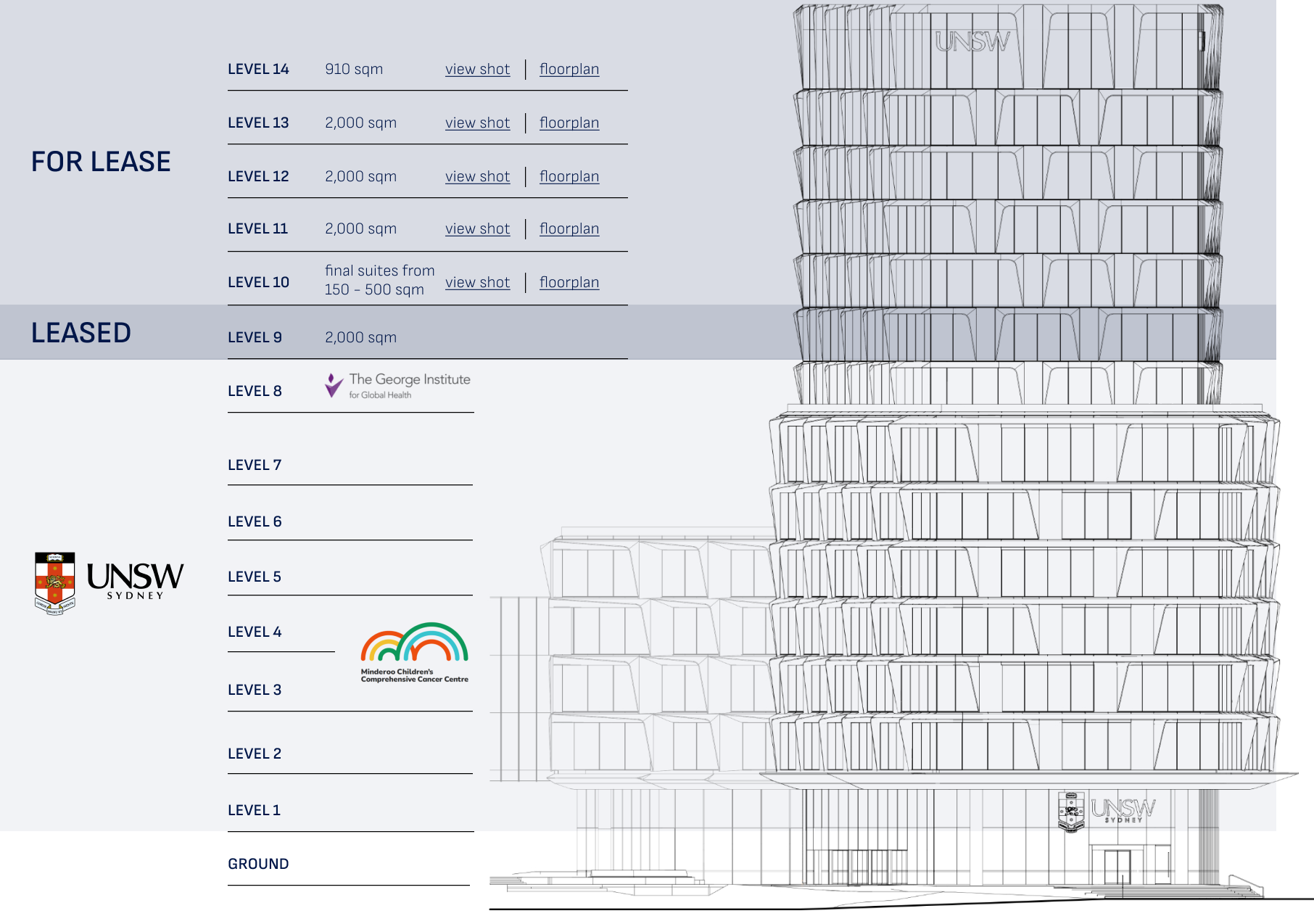
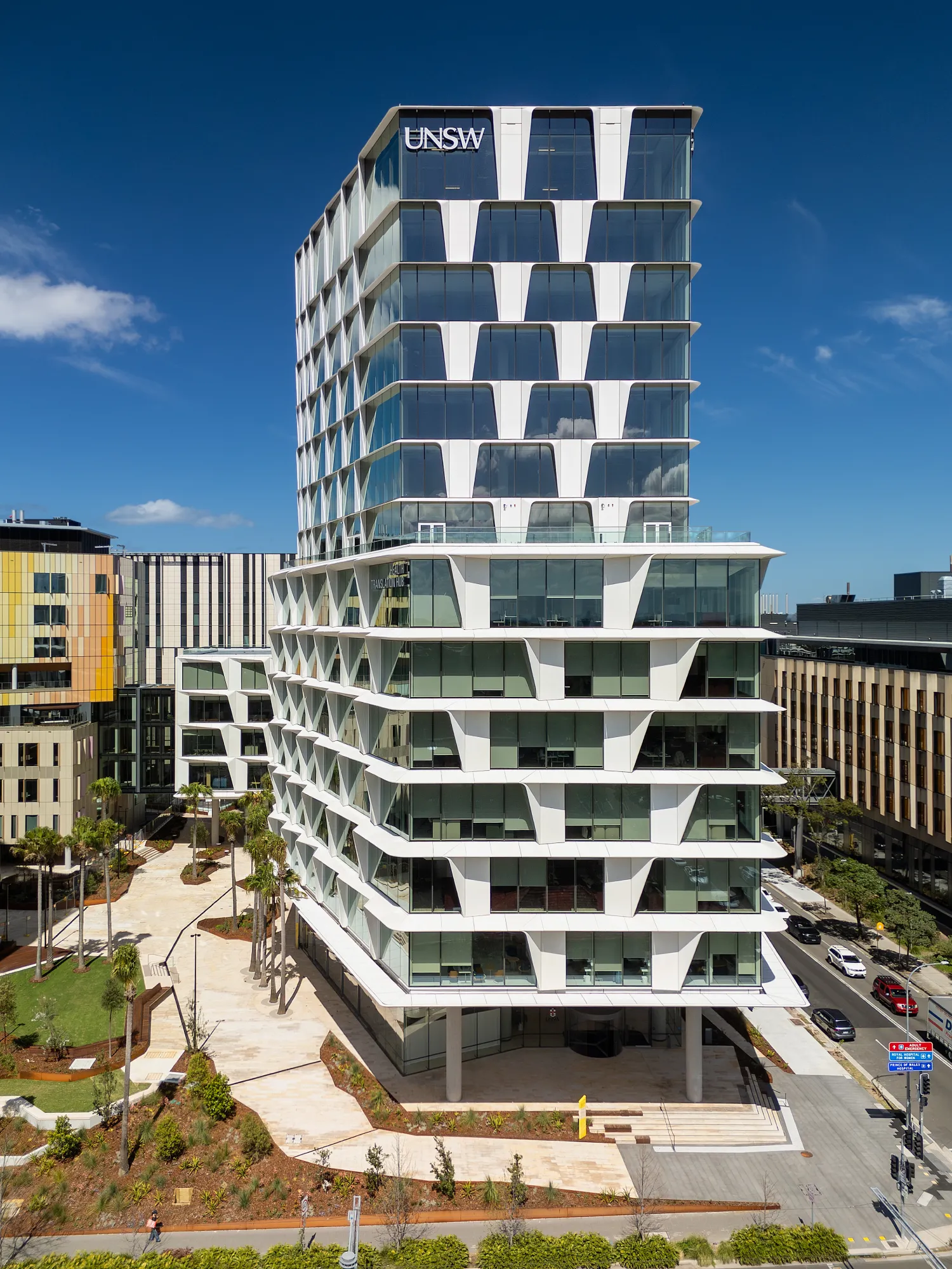
Part of the Randwick Health & Innovation Precinct, the HTH combines 14 levels of research, education and workplace to provide unrivalled collaboration between users.
With a focus on fostering an unrivaled ecosystem of research and development, the HTH offers an unprecedented working environment and an abundance of appealing public domain.
Leasing Enquiry


The HTH will enable the rapid translation of research, innovation and education into improved patient care, positively impacting the wellbeing of the broader community and the environment. With a focus on best in class, world leading technology to future proof healthcare and our environment.

* Target ratings

“The Health Translation Hub is the catalyst for change that will help transform our approach to health”
- Scientia Professor Vlado Perkovic,
Provost, UNSW Sydney


Convenience and connectivity are key at the HTH, making life easy for your team.
Physically connecting the UNSW Sydney campus with the Sydney Children’s Comprehensive Cancer Centre in the heart of Randwick Junction, it’s easily accessible by public transport and car. Strategically located 15 minutes from the airport or to the CBD, with Light Rail, express buses and parking available for an effortless trip.
Just moments away you’ll enjoy an array of retail and dining opportunities, with everything from supermarkets and specialty stores to services and restaurants within a short stroll.
Leasing Enquiry


The building’s design prioritises performance, comfort, and sustainability from the ground up. A passively designed façade reduces both overall energy use and peak demand while maximising natural light and thermal comfort. Shading elements are tailored to the building’s orientation, reducing glazing where it’s not needed and delivering a far more efficient outcome than a typical glass-box office. As a result, around 40% of the floor area enjoys daylight autonomy for 80% of the day.
The building is designed to operate without burning fossil fuels, being run on 100% renewable electricity. In addition, a 100kW of solar PV system has been installed on the roof to reduce peak electricity demand and the need for grid-supplied power.
A conscious approach to material selection occurred during design to address health and sustainability. This includes low-VOC, low-toxin and silica-free products to reduce tradesmen and occupants’ exposure to harmful off-gassing, including formaldehyde. Overall, the materiality of the building aids in reducing its environmental footprint, whilst contributing towards supporting circular economy principles and delivering a lower whole-of-life impact.
Landscaping and shading help reduce the urban heat island effect while creating spaces that connect people with nature. These green elements also contribute to wellbeing and encourage social interaction. A significant rainwater harvesting system and non-potable water network reduce pressure on the Sydney water basin. In collaboration with UNSW, the building’s integrated fit-out has been delivered to avoid waste, eliminate the need for recommissioning, and ensure systems are right-sized and optimised from day one.
The building uses a 100% outside air HVAC system with a perimeter zone conditioning approach, and counterflow chillers sized for standalone building performance. The aluminium used in the façade has been responsibly sourced, and upfront carbon emissions, including those from the fit-out, have been addressed as part of the project’s broader sustainability goals.
From the outset, the project team recognised the opportunity to leverage the scale of the development to drive broader industry change and deliver benefits well beyond the site boundary. This led to a number of firsts and transformative initiatives across materials, systems, and delivery approaches.
Key innovations included the sustainability certification of both new concrete mixes and façade aluminium suppliers, setting new benchmarks for material sourcing and transparency. The façade supply chain transformation in particular established a precedent for responsibly sourced curtain wall systems. On the systems side, the building adopts a series-counterflow chilled water system, a strategy typically reserved for precinct-scale infrastructure, scaled effectively for standalone building performance. The HVAC design features 100% outside air and a perimeter conditioning zone, supporting both energy efficiency and indoor environmental quality.
The project was also delivered under a sale and leaseback model, ensuring continuous alignment between developer, builder, owner, and tenant from design through to completion. This collaborative approach enabled a performance uplift from a 5 Star Green Star equivalence to a 6 Star target, reflecting the project's ambition to lead, not follow, in sustainable design and delivery.
D&C Building: Hansen Yuncken
Lead Consultants: Architectus (architect), ASPECT Studios (landscape architect)
The UNSW Health Translation Hub (HTH) is designed to accelerate the translation of research, innovation, and education into tangible improvements in patient care, delivering long-term benefits to both the community and the environment. It will provide healthier, more flexible spaces for building occupants. For the property sector, HTH sets a new benchmark with replicable approaches to HVAC design, façade sourcing, and carbon management. The wider community will also benefit from reduced operational impacts and a significantly lower carbon footprint.
Encouraging several building materials manufacturers to procure third-party certification for products and materials, which the GBCA was able to endorse and add to the Responsible Products Scorecard database, a recognised industry initiative that not only contributes to the growth of the database but also supports broader market transformation by enabling benchmarking and transparency. The project demonstrated that a collaboration between landowner, developer and occupier can successfully deliver a 6 Star outcome. It also secured responsible sourcing certification for aluminium and integrated a 100% outside air HVAC system that balances tenant flexibility with high operational efficiency.
Fill in the short contact form and a member of our team will be in touch.